
In defence of bubbles
Toxic algorithms and AI slop are ripping up our social fabric and even truth itself. Not only that, they subvert the words we need to describe what’s happening to us.
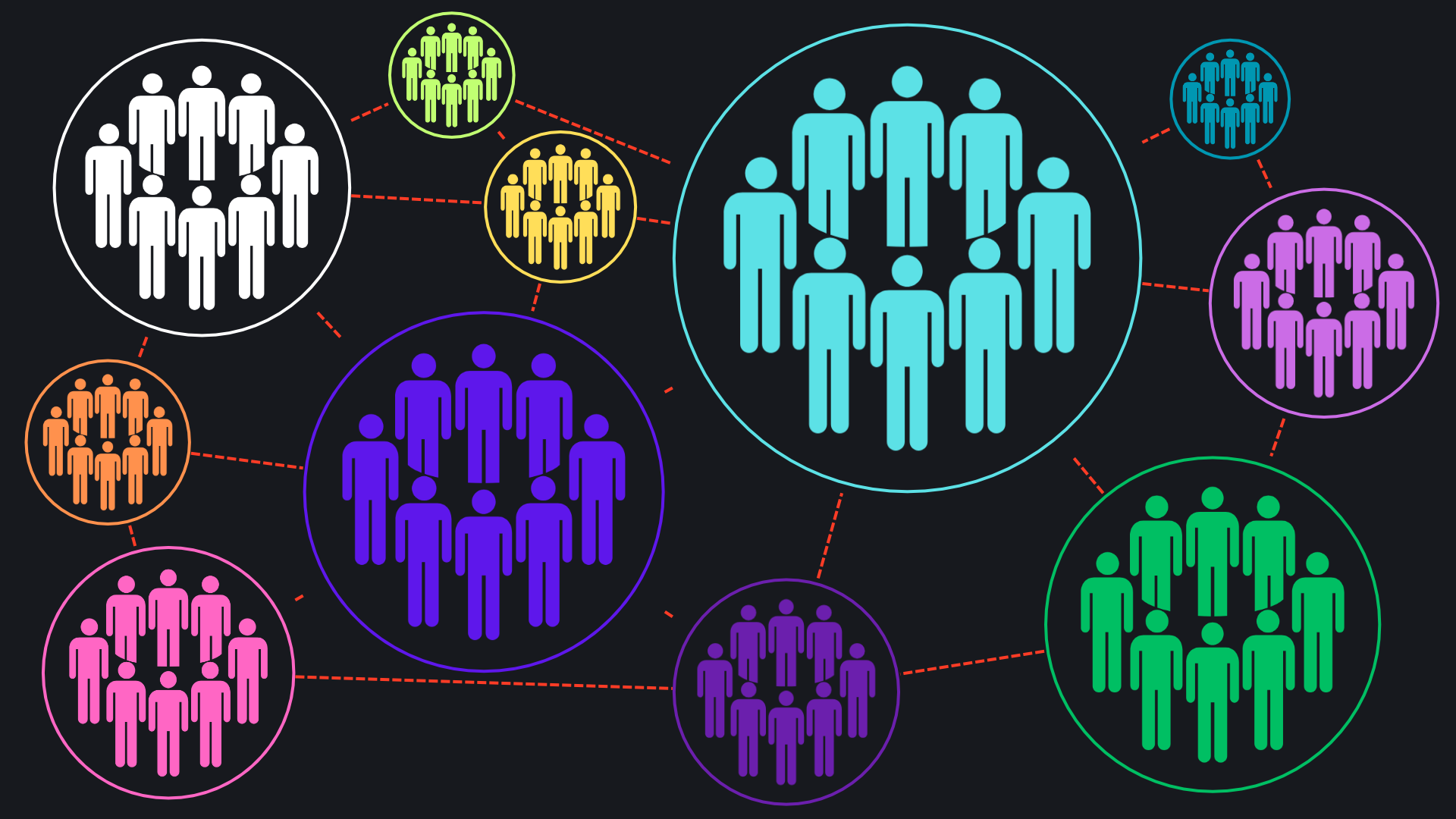
Toxic algorithms and AI slop are ripping up our social fabric and even truth itself. Not only that, they subvert the words we need to describe what’s happening to us.
At the Newsmast Foundation we work with partners who want to publish, organise and foster community online. They want to shake off Big Tech and set up online spaces where they can belong. As we work on digital tools for these communities, listen to partners, and explain what we can do, we are more and more aware that it’s time to reclaim and redefine some key words.
Here we’ll start with two examples. Firstly, “social media”. Another is the concept of people being in online “filter bubbles”.
“Social Media”
“Social media” is a phrase that has not just lost its meaning but is actively misleading. The big “social media” platforms today don’t consist of you and people you know interacting online. Only seven percent of users’ time on Instagram is spent on content from family and friends. That’s according to Meta, the platform’s owner. Analysts have come up with different words to describe the big platform experience. Antisocial? Parasocial? Asocial? Pick your theorist. What we're experiencing on the big “social media” platforms is something that is done to us. It's mesmeric, it's addictive, and most of the time, it’s broadcasting.
It’s worth reminding ourselves what a truly social network could be (and maybe once was). You would be looking for engagement, reactions, active participation, and responses; things that imply bilateral connections, or many-to-many interactions. Online “social media” can help people come together, and reinforce their bonds as a group.
It can work for good, but there's a familiar flip side. You might group together in negative ways, and become xenophobic or suspicious, blame outsiders and judge others. The big platforms are still able to bring like-minded people together, but too often then they seem to be pitted against other groups.
The metaphor that the old Twitter was the world’s town square was flawed from the start: who goes to a town square and stands in the middle and talks about what they're doing? No, people go through the town square to the cafes and the pubs and the book shops where they want to be. These are the online communities that can rebuild in an open, and social, web.
Bubbles
But how big should an online community ideally be? Mid-size platform providers seem to face a dilemma: to occupy a niche with a tight community, or make a big tent with larger numbers – and potentially larger revenue with which to reward investors. BlueSky for example seems to face a strategic crossroad. It faces criticism for being a bubble of like-minded users, even entrenching political division, and failing to appeal to bigger audiences.
At Newsmast, we are more and more convinced that trying to build a mass communication platform for everyone in one huge group is actually part of the problem.
Maybe we shouldn't try to have a vast, universal public space where everyone gets along? Maybe we humans aren’t made for that and online behaviour amplifies our flaws? Are people just horrible, mean, suspicious, and prejudiced? Even if they are not – we’d like to think they aren’t – why mess around with a technology-business model combination that rapaciously feeds on weaknesses in our humanity?
That's why as well as putting scare quotes around “social media”, we need to talk about “bubbles”. For too long an online “filter bubble” (aka echo chamber) has been a negative: fostering a form of psychological ill-health, akin to obesity.
But given the hostility and toxicity of the alternatives, it’s OK to be in a bubble. Once an online space is stable, once people are doing what they want to do (whatever the niche, be it chatting about local politics, or fandoms) then they can digitally open the door and meet with others. Bubbles can be safe spaces, a base from which we can then emerge and interact on a more broad basis.
That's where the open social web has its potential and where the design and the federal structure of ActivityPub (including Mastodon) is particularly powerful and relevant.
Bubbles can be sanctuaries from the unpleasantness that humans can do to each other. In fact aren’t our most cherished social groups: family, place, belief or clubs also “bubbles”?
Some of our most compelling and inspiring partners are those who know what they want. They have a community already: they're not just hanging out online with randos. Why would they? They want to actually achieve something using the Internet, together. From there, they see an additional benefit of being able to reach out to other bubbles.
Focussed communities, confident in their online home, also can realise some of the best potential of the social web: like-minded people can meet up, share, and organise even if they are isolated or scattered. They don’t have to wade through a rowdy and raucous town square.
They don’t feel they should. And they don’t need to. Let people organize and socialise naturally, and mean what they say and say what they mean, online and off.
This blog is based on a talk given at FediDay Berlin in October 2026. Full video here